Showing posts with label St. Paul Island. Show all posts

04 August 2013

Ten Best Birds from St. Paul Island, 2012

Last summer (2012) I had the privilege of working as a guide on St. Paul Island, Alaska, with Scott Schuette and Doug Gochfeld.  St. Paul Island is one of the Pribilof Islands, a small group in the middle of the Bering Sea.  Its unique geographic location makes it a famous birding destination: it is slightly west of the easternmost tip of Russia, and so it frequently gets old-world vagrants.  Plus, it is a great spot to see some of the endemic Bering Sea species like Least Auklets, Crested Auklets, and Red-legged Kittiwakes.

Today, I want to show you the ten best birds of my 2012 season on the island.  There are many ways to define the "best" birds.  This is not a science.  The ranking here is strictly based on how much I enjoyed seeing them.  That is of course strongly affected by rarity, but these are not necessarily the ten rarest birds.


10. Wood Sandpiper.  This species is major rarity anywhere in the contiguous 48 states, but annual in small numbers at St. Paul.  I saw up to three individuals in a day, and photographed both juveniles (like this one) and an adult.

This juvenile Wood Sandpiper paused in Town Marsh on St. Paul Island while trying to find its way to Australia or southeast Asia. (copyright Ryan O'Donnell)


9. Gray-tailed Tattler.  Like the Wood Sandpiper, this species is annual on St. Paul but very rare in the contiguous 48: a bird in Massachusetts last fall was only the third North American record away from Alaska.  We had multiple sightings of this species in their fall migration, up to two in a day.   

This adult Gray-tailed Tattler was photographed on the sandy beach on the north side of the island, probably the first land it had seen since leaving Siberia on its way south. (copyright Ryan O'Donnell)

8. Little Stint.  Also rare in the contiguous 48, with total records probably around 50 sightings, and less than annual on St. Paul.  We had up to two individuals at a time on the island last year.

This juvenile Little Stint (at front right) joined a few juvenile Western Sandpipers to snack in the mudflats on St. Paul as it was headed south. (copyright Ryan O'Donnell)

7. Hawfinch.  This was high on my list of dream birds when I was preparing for my summer in the Pribilofs.  This bird, first spotted on May 23rd and still present a week later when our access to the area where the bird was found was closed for the fur seal breeding season, was the 10th record for the Pribilof Islands.  There are no North American records of this species outside of Alaska, and it is less than annual in Alaska.

This Hawfinch, with dirt on its bill from picking at seeds in the grass, is a Eurasian relative of our Evening Grosbeak. (copyright Ryan O'Donnell)

6. Tundra Bean-Goose.  This species is "casual" (less than annual) in Alaska, and unrecorded elsewhere in North America.  Many earlier records of "Bean Goose"from Alaska had to remain unidentified when the species was split into the Tundra Bean-Goose and Taiga Bean-Goose.  This was an exciting find as our first real Asian rarity of the season, on May 12th.

After we accidentally flushed this Tundra Bean-Goose from a small melt pond, I was afraid we wouldn't see it again.  A few minutes later, it circled back past us and I was able to take a few photos, including this one.  (copyright Ryan O'Donnell)

5. Terek Sandpiper.  Another of my dream birds before arriving on the island, this fall migrant hung around for several days and pleased many visiting birders.  This species is named for the Terek River where it was first discovered, a tributary of the Caspian Sea.

I love the unique head shape and upturned bill of this Terek Sandpiper.  (copyright Ryan O'Donnell)

4. Eurasian Bullfinch.  Wow, what a charmer!  This adult male was found coming to some seed spread by a local resident between houses in the center of town.  Imagine having this on your yard list in North America!  This was the first spring record for the Pribilofs, but there had been a handful of fall records.

The bold and beautiful male Eurasian Bullfinch, peeking up from a meal of millet.  (copyright Ryan O'Donnell)

3. Dark-sided Flycatcher.  Flycatchers in general are among my favorite groups of birds, pushing this drab juvenile into the top three.  This was the seventh of this species reported from the Pribilof Islands.

This juvenile Dark-sided Flycatcher probably found plenty of bugs in the leeward side of an old volcanic cone on St. Paul.  (copyright Ryan O'Donnell)

2. White-tailed Eagle.  This Asian counterpart to North America's Bald Eagle was first found early in the season and continued, off and on, for the rest of the year.  It would sometimes go missing for weeks at a time, and we suspected it might be moving between the Pribilof Islands.  It was frustrating at times because it never seemed to develop much of a pattern, making it hard to track down, but it was thrilling any time it happened to fly past as it hunted around the island.  This was the first time this species had been seen in the Pribilofs.

White-tailed Eagle soaring over St. Paul Island. (copyright Ryan O'Donnell)

1. Pin-tailed Snipe.  Easily the rarest bird, this was our only Code 5 bird (five or fewer North American records), and this was the fifth North American record.  The previous four records were all from Attu Island, at the western end of the Aleutians.  Attu is far enough west to be in the eastern hemisphere, so including one record from a remote part of the Hawaiian Islands, this was the second record for the western hemisphere.  This photo is about the best I could manage, but fortunately Doug was able to take some better ones!


Out-of-focus Pin-tailed Snipe flushing from the tundra of St. Paul Island (copyright Ryan O'Donnell)

16 November 2012

St. Paul Island, part 2: Breeding songbirds

In the last installment, I wrote about the variety of birds that breed in the cliffs of St. Paul Island, Alaska, including some very unique species.  Today I'd like to introduce you to the four songbirds that regularly breed on St. Paul. Yup, there's only four!

Among the most common of the breeding songbirds here is the Lapland Longspur.  Lapland Longspurs song sounds a bit like that of the Western Meadowlark, and can be heard from all around during the spring and early summer on the island.

A male Lapland Longspur, one of the most abundant species on the island.  (This and all photos on this post are copyright by the author, Ryan O'Donnell.) 

Another relatively common breeding species on the island is the Snow Bunting.  This species usually nests among rocks, so it is frequently found near the cliffs but also in quarries and other areas where the recent volcanic rocks crop out above the vegetation.  McKay's Buntings have been found in the breeding season on St. Paul Island in the past, but not this year and never in considerable numbers.

A male Snow Bunting guarding his territory at the edge of a boulder field.

A juvenile Snow Bunting, out of the nest for a few days or maybe weeks.


St. Paul Island is also home to an endemic subspecies of Pacific Wren (recently known as Winter Wren).  The Pribilof Pacific Wren is much more common on nearby St. George Island, and has reportedly gone extinct on St. Paul Island and recolonized from St. George (Hanna 1920).  It can be told from most of the mainland birds by its larger size and longer bill.  It is a year-round resident on the island, which is amazing considering that it eats only insects and given the winter conditions there!  Last winter was particularly harsh, and this summer we were only able to find one male on territory on the whole island.

A Pribilof Pacific Wren perched on a lichen-covered rock at the edge of a fur seal colony.


The last of the regularly breeding songbirds is also the most morphologically unique.  The Pribilof subspecies of the Gray-crowned Rosy Finch has a head pattern like the Hepburn's subspecies, but is much larger than the mainland subspecies.  The National Geographic book lists it at 8.25 inches long, only 0.25 inches smaller than a European Starling.  They are sometimes referred to as the "St. Paul House Sparrow" because they nest in the eaves of the buildings in town (as well as natural cavities in rocks, etc., around the island), and there are no real House Sparrows on the island.  

A Pribilof Gray-crowned Rosy-Finch on the makeshift platform seed feeder outside our apartment. 

Another Pribilof subspecies Gray-crowned Rosy-Finch.  Both of these photos show adults, but sexes do not differ in plumage.
Up next from St. Paul Island, Alaska? Well, we'll see. . . . Probably either the last of the breeding birds (shorebirds and waterfowl), or some common migrants.


04 November 2012

St. Paul Island, part 1: Cliff-nesting birds

Two birders view the nesting alcids on the cliffs of St. Paul Island, Alaska.  (This and all photos in this post are copyrighted by the author, Ryan O'Donnell.)
This summer I had the great pleasure of working as a guide on St. Paul Island, Alaska.  This 14-mile long island in the middle of the Bering Sea is a mecca for birders looking for rare birds from Asia, especially birders who keep a North American or American Birding Association Area list.  But this island also draws birders from around the world for its unique collection of regularly breeding birds.

Most of the birds that breed on the island use cliffs, like the ones shown above, for breeding sites.  Some of these are widespread species, like Common Murres and Thick-billed Murres.  Many of the smaller alcids here are unique to the Bering Sea region, like Parakeet Auklets, Least Auklets, and Crested Auklets.  Another big draw, especially for photographers, is the puffins: both Horned Puffins and Tufted Puffins nest on the island.  

A Common Murre on the cliffs of St. Paul Island.  Despite the name, Common Murres are somewhat less common than Thick-billed Murres here, although they are still easily seen throughout the breeding season.

Thick-billed Murres are the more common of the two murre species breeding on St. Paul Island.  One way to distinguish them is by the bright white gape line, which is lacking in Common Murres.

Two Thick-billed Murres attend their single egg.  Murres don't build nests; they lay their single egg directly on a small little ledge on a cliff.

A pair of Parakeet Auklets on a cliff.  The clump of vegetation under the bird on the right looks like a nest, but it is not.  This species nests in cracks and crevices in the cliff wall.

Another Parakeet Auklet, this time framed by some of the Nootka Lupine that is abundant on the island.

One of the cutest birds in the world, a Least Auklet.  This species usually nests among piles of boulders at the base of cliffs or other areas, but sometimes also nests among the cracks in the cliff.

The distinctive Crested Auklet, probably the least abundant of the nesting alcids on St. Paul Island, but still easily found on almost any day in the breeding season.

A Tufted Puffin lands at the cliffs with some nesting material.  Both species of puffins on the island nest in burrows in or around the cliffs.

Another Tufted Puffin, among the most charismatic of the birds on the island.

A Horned Puffin in flight past the cliffs.  People often wonder why they are called "horned" until they get close enough to see the small black lines above the eyes are actually little fleshy horns that stick up above the head.


A pair of Horned Puffins at the entrance to their nesting burrow near the top of one of the cliffs.
 Two other unique groups of birds use the cliffs for nesting, the cormorants and the kittiwakes.  Cormorants include the relatively widespread Pelagic Cormorant, and also the Bering Sea endemic Red-faced Cormorant.  Both species have some red on their faces, so the best way to tell them apart, even at a distance, is by the pale bill and relatively thicker head and neck of the Red-faced Cormorant.

The two breeding cormorant species on St. Paul, a Red-faced Cormorant at left and a Pelagic Cormorant at right.

Red-faced Cormorant, endemic to the Bering Sea area.
Finally, we have two species of kittiwakes that nest on St. Paul.  Black-legged Kittiwakes are by far the most abundant.  They are a circumboreal species, found around the northern oceans.  Red-legged Kittiwakes, in contrast, nest in only four areas around the Bering Sea.  They are high on the wish list of many birders that visit the island.  Black-legged Kittiwakes outnumber Red-legged on St. Paul by maybe 10 or 20 to one, but Red-leggeds can still be seen easily on any day in the breeding season.

A Black-legged Kittiwake adult and nestling. 

Large flocks of Black-legged Kittiwakes can be seen around the island, particularly at many of the small freshwater lakes like this one, appropriately called "Kittiwake Lake" where the kittiwakes gather to bathe.

Two Red-legged Kittiwake nests.  Red-legged Kittiwakes generally prefer higher breeding sites among the cliffs, so on St. Paul you usually have to hike to the highest cliffs, about 400 ft. above sea level, to see their nests.

A Red-legged Kittiwake in flight.  When the red legs dangle, they are easy to identify, but Red-legged and Black-legged Kittiwakes can still be identified in flight when their legs are tucked up into their feathers.

One of the coolest gulls in the world, in my opinion: a striking Red-legged Kittiwake.
Coming soon: a post on the other breeding birds of St. Paul Island, those that breed away from the cliffs.


08 June 2012

Where are the updates from St. Paul?

It's been a busy first month on St. Paul Island, Alaska!  I intended to be updating this blog regularly, but I just haven't been able to make the time.  For the time being, I'll refer you to my Flickr set from the island.  There will be less narration and summary there, but if you're anxious to learn about what I've been seeing on the island, it will give you a preview until I can get some blog posts up!

Pribilof Island subspecies of Rock Sandpiper

07 April 2012

The Next Great Adventure: 3.5 Months in the Pribilofs

I recently accepted a summer job working as a tour guide, mostly for birders, on St. Paul Island in the Pribilofs!  This will be an amazing experience, and a nice paid "vacation" (although I'll be working a lot of hours), before I start a real career in the fall.


The Pribilofs are a small cluster of islands in the Bering Sea, between Alaska and Russia.  They are less than 200 miles from Russian waters and about as close to Russia as they are to Anchorage.  The Pribilofs are a popular destination for birders, for two reasons.  First, there are a lot of north Pacific/Bering Sea species that can only be seen in this area.  For example, Red-faced Cormorants, Steller's Eiders, Least Auklets, Crested Auklets, Parakeet Auklets, Thick-billed Murres, Tufted Puffins, Horned Puffins, Red-legged Kittiwakes, and McCay's Buntings all breed here.  Second, because the islands are so remote and so close to Asia, they are a likely spot to find lost Asian birds.  This is a big deal for North American birders who are trying to build their life lists, especially for those who are concerned with their American Birding Association (ABA), North American, or United States lists.  Some of the more regular Asian vagrants on these islands include Gray-tailed Tattler, Wood Sandpiper, Red-necked Stint, Sharp-tailed Sandpiper, Slaty-backed Gull, and Eastern Yellow Wagtail.  But perhaps the biggest draw are the rarest birds: tours in previous years have found Brown Hawk-Owl, Gray Heron, Chinese Pond-Heron, Eurasian Hobby, Spotted Redshank, Great Knot, Solitary Snipe, Oriental Cuckoo, Great Spotted Woodpecker, Rufous-tailed Robin, Oriental Greenfinch, Hawfinch, and many more very rare species for North America, and you never know what might turn up here next.  To see the complete list, click here.

If birds aren't your thing, there's still plenty to see on the island.  The Pribilofs were once known as the "Seal Islands" because of the large colonies of Northern Fur Seals that breed there.  Walruses can be seen here, more rarely.  A feral herd of reindeer now roam the island.  The Pribilof Island Shrew lives only on St. Paul Island, where I'll be, and nowhere else in the world.  There is an island subspecies of Arctic Fox that is very common there.

If you are interested in visiting the island, you can go with any of several tour companies, but I'll be working for St. Paul Island Tours.  I hope to see you there!

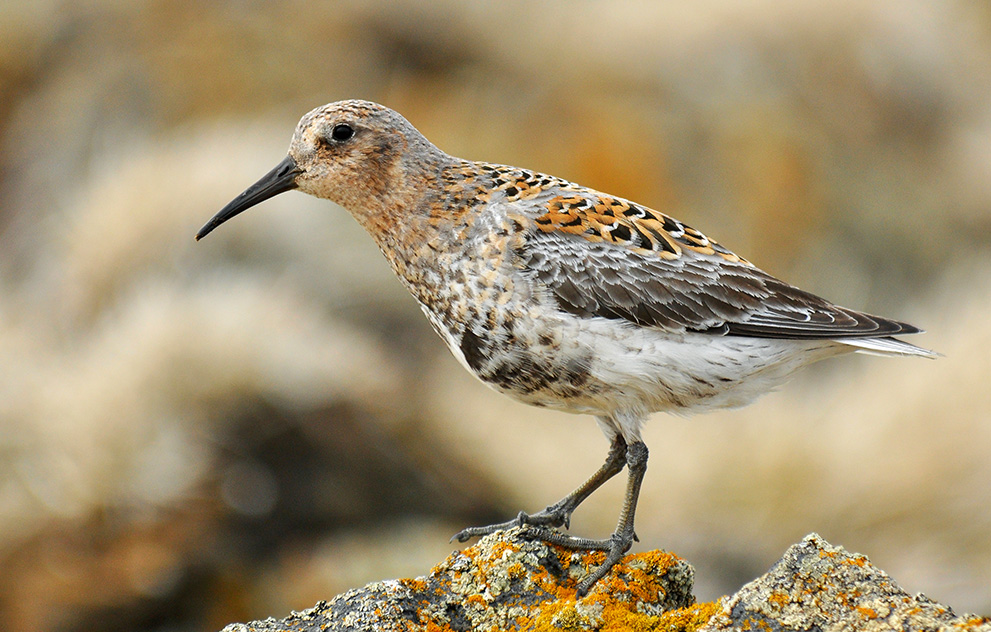
Parakeet Auklets on St. Paul Island, in the Pribilofs.  Parakeet Auklets are one of the specialty species of the Bering Sea and they can be seen breeding on the cliffs around the island.  Photo by Francesco Veronesi and available through Creative Commons license.
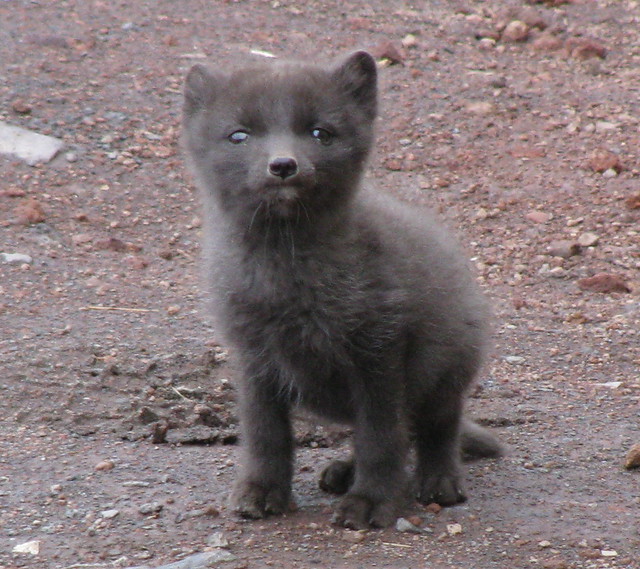
Arctic Fox pup on St. Paul Island.  These adorable canids are common throughout the island.  Photo by "im me" and available through Creative Commons license.
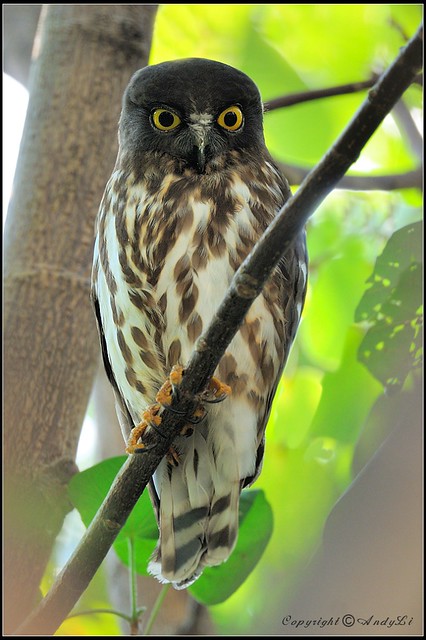
Brown Hawk-Owl, photographed somewhere in Asia.  A Brown Hawk-Owl found on St. Paul Island in 2007 was the first record for North America.  Photo by Andy Li and available through Creative Commons license.