07 April 2012

The Next Great Adventure: 3.5 Months in the Pribilofs

I recently accepted a summer job working as a tour guide, mostly for birders, on St. Paul Island in the Pribilofs!  This will be an amazing experience, and a nice paid "vacation" (although I'll be working a lot of hours), before I start a real career in the fall.


The Pribilofs are a small cluster of islands in the Bering Sea, between Alaska and Russia.  They are less than 200 miles from Russian waters and about as close to Russia as they are to Anchorage.  The Pribilofs are a popular destination for birders, for two reasons.  First, there are a lot of north Pacific/Bering Sea species that can only be seen in this area.  For example, Red-faced Cormorants, Steller's Eiders, Least Auklets, Crested Auklets, Parakeet Auklets, Thick-billed Murres, Tufted Puffins, Horned Puffins, Red-legged Kittiwakes, and McCay's Buntings all breed here.  Second, because the islands are so remote and so close to Asia, they are a likely spot to find lost Asian birds.  This is a big deal for North American birders who are trying to build their life lists, especially for those who are concerned with their American Birding Association (ABA), North American, or United States lists.  Some of the more regular Asian vagrants on these islands include Gray-tailed Tattler, Wood Sandpiper, Red-necked Stint, Sharp-tailed Sandpiper, Slaty-backed Gull, and Eastern Yellow Wagtail.  But perhaps the biggest draw are the rarest birds: tours in previous years have found Brown Hawk-Owl, Gray Heron, Chinese Pond-Heron, Eurasian Hobby, Spotted Redshank, Great Knot, Solitary Snipe, Oriental Cuckoo, Great Spotted Woodpecker, Rufous-tailed Robin, Oriental Greenfinch, Hawfinch, and many more very rare species for North America, and you never know what might turn up here next.  To see the complete list, click here.

If birds aren't your thing, there's still plenty to see on the island.  The Pribilofs were once known as the "Seal Islands" because of the large colonies of Northern Fur Seals that breed there.  Walruses can be seen here, more rarely.  A feral herd of reindeer now roam the island.  The Pribilof Island Shrew lives only on St. Paul Island, where I'll be, and nowhere else in the world.  There is an island subspecies of Arctic Fox that is very common there.

If you are interested in visiting the island, you can go with any of several tour companies, but I'll be working for St. Paul Island Tours.  I hope to see you there!

Parakeet Auklets on St. Paul Island, in the Pribilofs.  Parakeet Auklets are one of the specialty species of the Bering Sea and they can be seen breeding on the cliffs around the island.  Photo by Francesco Veronesi and available through Creative Commons license.
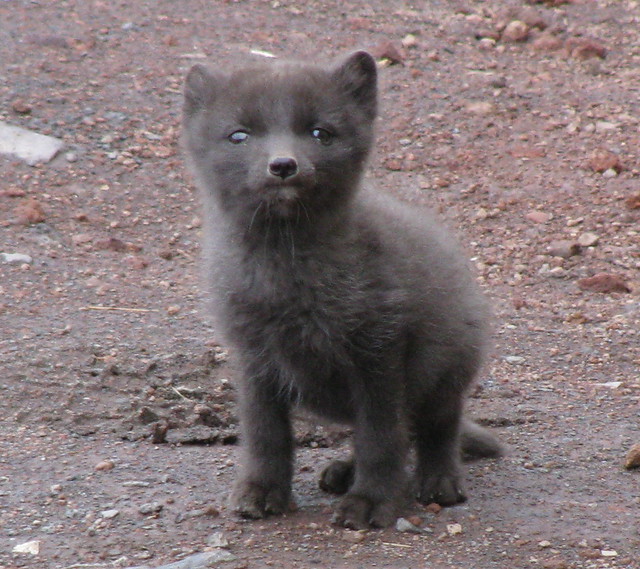
Arctic Fox pup on St. Paul Island.  These adorable canids are common throughout the island.  Photo by "im me" and available through Creative Commons license.
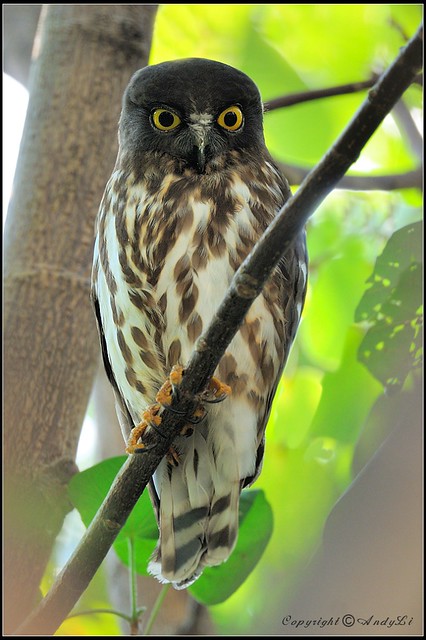
Brown Hawk-Owl, photographed somewhere in Asia.  A Brown Hawk-Owl found on St. Paul Island in 2007 was the first record for North America.  Photo by Andy Li and available through Creative Commons license.


20 February 2012

Mexican Duck in Utah

Mexican Duck, Anas (platyrhynchos) diazi, at First Dam, Logan, Utah.  Copyright Ryan P. O'Donnell.  
If you follow Utah Birdtalk/Birdnet, you already know that on February 5th, about two weeks ago, my friend Craig Fosdick found a very interesting duck at First Dam in Logan, Utah.  It was a Mexican Duck; probably the northernmost record of the species, and only the third from Utah.  Mexican Ducks are easy to overlook, and many readers of this blog might have never heard of one before.  Even the experienced birders Craig was with at the time hardly gave this unique vagrant a second look.

First, what is a Mexican Duck?  That question is not easy to answer.  According to the American Birding Association and the American Ornithologists Union, it is a subspecies of Mallard.  But that view is considered by some to be antiquated and inaccurate.  Recent genetic work has shown that the Mexican Duck may actually be its own species, and it is at least as unique as several other species such as the Laysan Duck and the Mottled Duck.  The picture is complicated, however, because Mallards contain several genetic lineages, and thus to have species boundaries that reflect mitochondrial gene phylogenies, one would either have to split Mallards based on strictly genetics, or else consider "Mallards" to include Laysan Ducks, American Black Ducks, Mottled Ducks, and many others, which obviously does not reflect biology well.  This is an area that is in need of additional research, particularly in generating phylogenies and assessing hybridization with nuclear molecular markers.

Phylogeny of Mallard-group ducks, modified from Johnson and Sorenson 1999, based on mitochondrial DNA sequences.  Note that Mallards appear twice here, having (at least) two different mitochondrial sequences.  Also note that Mexican Ducks are as distinct from Mallards as many other groups that we know of as species.

The definition of species within the Mallard group is confusing, but perhaps even more so in the case of Mexican Ducks, because our understanding of this species is clouded by hybridization with Mallards in Arizona and New Mexico.  A classic study of morphology in Mexican Ducks found that there are virtually no pure Mexican Ducks anywhere in the species range, according to a numerical scale of morphology that ranges from pure Mexican Duck to pure Mallard.  However, an alternative interpretation of the same dataset is that our definition of what identifies a pure Mexican Duck is too narrow, and that pure Mexican Ducks can show traits that have once been taken to be indicative of Mallards.

With respect to the duck seen as recently as yesterday in Logan, this appears about as close to a pure Mexican Duck as one can expect at the northern part of the range of the (sub)species.  There is very little green on the head.  The bill is bright yellow.  The tail shows no patches of white.  The speculum has green iridescence, and is bordered only thinly by white.  The rump and undertail coverts match the flanks well in color, showing no obvious indication of the black that a male Mallard has in these areas.  The belly is dark, matching the color of the rest of the bird well.  The only part that seems to show some obvious Mallard ancestry is that the central retrices (tail feathers) curl up slightly off the plane of the tail, hinting at the curled central tail feathers of an adult male Mallard.  But, with how little we know of "pure" Mexican Ducks, perhaps this is not outside the range of variation shown by them?  Only an extensive study of morphological variation and nuclear DNA across the range of the Mexican Duck and Mallard can really address this question well.

The Mexican Duck looks a lot like a female Mallard, but darker and (in a male, such as this one) with a bright yellow bill.  Copyright Ryan P. O'Donnell.
The Mexican Duck's speculum has more of a green iridiscence, compared to the purple of a Mallard's, although the color varies somewhat with the angle of view.  Also note here how, unlike a male Mallard, the rump is about the same color as the flanks and the tail is dark, without white.  Copyright Ryan P. O'Donnell.

Unlike a Mallard, the lower belly is not noticeably paler than the flanks or breast.  The bright white underwing coverts are a trait shared by male Mexican Ducks and male Mallards.  Copyright Ryan P. O'Donnell.

This angle can be tough to see in the field, but it shows how the back of the Mexican Duck is generally dark, and the speculum is only thinly bordered by white, not boldly bordered by white like a Mallard's speculum.  Note that at this angle the speculum looks more purple than green, like a Mallard's.  Copyright Ryan P. O'Donnell.
As rare birds go, this individual might be pretty easy to find.  It has been seen over the last two weeks at First Dam in Logan.  Watch for a duck that looks a bit like a female Mallard, but is darker and has a bright yellow bill.  While I don't advocate feeding park ducks, it is a common practice at this park, and if you happen to time your visit when a local is feeding them, this duck might come right out in the open and fight with the other local domestic breeds for bread.  Otherwise, you might get lucky and see it swimming around on the water, or it might be sleeping on the far shore of the lake.  If it's not out in the open when you get there, try patiently scanning the sleeping ducks along the shoreline.

The Mexican Duck being seen at Logan's First Dam seems to have paired up with a female Mallard.  Note in this view how this Mexican Duck's central retrices lift slightly off the others, perhaps indicating a small amount of Mallard heritage.  Copyright Ryan P. O'Donnell.

03 February 2012

Evening Grosbeak Call Types


Like Red Crossbills and Pine Grosbeaks, Evening Grosbeaks (Coccothraustes vespertinus) have been described as having distinct call types that vary geographically (Sewall et al. 2004). These distinct call types also correspond approximately with subspecies that have been described based on morphology. Because of these distinct call types which correlate to geography and morphology, it has been suggested that Evening Grosbeaks may be in need of further taxonomic work, that is, that they may be candidates for future splitting. In that Sewall et al. paper, they leave northern Utah as a question mark in their map, an unsampled area between the ranges of (morphologically-defined) subspecies C. v. brooksi and C. v. warreni, where no birds were examined and no calls recorded.

Yesterday I recorded a small flock of 4-6 Evening Grosbeaks calling in the treetops above my yard in Logan, Utah. Evening Grosbeak call types are distinct enough that they can be told apart by ear, but I don't have any practice at this so I imported recordings into the software RavenLite to examine the sonograms.

Most of the calls were of Type 1. This is the call type that is given by C. v. brooksi, the subspecies which ranges from Oregon, Idaho, and Wyoming north to northern British Columbia. Here is a sonogram of a Type 1 call I recorded yesterday:

And here is a recording of Type 1 calls from Washington you can listen to:


In my recording yesterday, I was also able to pick out a few examples of Type 4 calls in my recordings, which is typical of C. v. warreni and mapped by Sewell et al. as occurring from about the Uintah Mountains, through Colorado, to northern Arizona and northern New Mexico. Here is a sonogram of one of the Type 4 calls from my yard:


And here are some Type 4 calls from Colorado you can listen to:


Sewall et al. documented both call types 1 and 4 from northwestern Wyoming and southern Colorado. It appears that both call types also occur in northern Utah. More work will have to be done to tell whether this is the result of movement of individuals, intergradation between subspecies, or overlap between reproductively isolated cryptic species.

Sewall, K., R. Kelsey, and T. P. Hahn. 2004. Discrete variants of Evening Grosbeak flight calls. Condor 106:161-165.

15 January 2012

White-crowned Sparrow Subspecies in Utah

One of the things that I love about birding is that the challenges never stop coming; there's always more to learn.  Once a birder has a pretty good handle on the species found in his or her area, they often move on to trying to tell subspecies apart.  This might sound quite intimidating at first, but for some subspecies, it can be pretty easy.

There are two subspecies of White-crowned Sparrow that regularly occur in Utah.  Mountain White-crowned Sparrows (Zonotrichia leucophrys oriantha; also called "Interior West White-crowned Sparrows") breed here, as you might expect, mostly in the mountains.  Gambel's White-crowned Sparrows (Z. l. gambelii) winter here, having migrated down from their breeding range in the western taiga of northern Canada.  Around the same time Gambel's are arriving from the north, the Mountains are heading south, leaving the state to winter in southern Arizona and northern Mexico.  There are a few eBird records of Mountain subspecies wintering in Utah, but I've never actually seen one documented here in Utah: I suspect it is very rare if it occurs at all in Utah in winter, but please comment below if you've documented Z. l. oriantha in Utah in winter.

Telling these two subspecies apart is relatively easy.  Gambel's have a yellowish bill and pale lores; Mountains have a pinkish bill and dark lores.  (The lores are the area between the eye and the bill.  Look to see whether the dark line that both subspecies have behind the eye continues in front of the eye to connect with the stripe on the side of the crown.)  Bill color is a little less reliable in young birds, but even the young ones usually have the appropriate color lores.

It is always possible that one of the other three subspecies of White-crowned Sparrows could show up in Utah, but this would be very unlikely.  Start by practicing telling these two subspecies apart, and you'll be more prepared for a vagrant of another subspecies.  For more on distinguishing subspecies of White-crowned Sparrows apart, see this and this post from David Sibley; for the VERY interested, see this extensive treatment, also by Sibley.

Adult Mountain White-crowned Sparrow, Z. l. oriantha,  Logan, Cache County, Utah.  11 May 2011.

Adult Mountain White-crowned Sparrow, Z. l. oriantha, Antelope Island, Davis County, Utah.  7 May 2011.

Adult Gambel's White-crowned Sparrow, Z. l. gambelii, Washington County, Utah.  19 Mar 2011.

Immature Gambel's White-crowned Sparrow, Z. l. gambelii, Cache County, Utah.  20 Feb 2011.
Immature Gambel's White-crowned Sparrow, Z. l. gambelii.  Gunlock Reservoir, Washington County, Utah.  16 Mar 2007.


Probably an adult Gambel's White-crowned Sparrow, Z. l. gambelii, Beaver Dam Wash, Washington County, Utah.  28 Nov 2009.  This individual appears to have an unusually dark bill relative to most Gambel's.  Are those brownish sides?  Are the white stripes dingier than expected for Gambel's?  This might be worth looking at again when I get more experience: is this possibly a vagrant of a Pacific Northwest subspecies?


(All photos copyright Ryan O'Donnell)

18 December 2011

Logan CBC Highlights

Yesterday was Logan's Christmas Bird Count, the fifty-somethingth one day a year when 60 or so volunteers gather with the goal of a complete census of the birds in a 7.5 mile radius circle around Logan. As usual, we started before dawn, trying to find owls in the neighborhoods and canyons within our circle.  Guillaume and I went up Green Canyon.  It was cold!  We started at 5:00 AM, giving us over two hours before sunrise, but we had no luck with the owls here.  Our first bird was an American Robin calling as the sky turned from black to blue.

Guillaume Peron broadcasts owl calls in the cold pre-dawn of Green Canyon.

By the end of the day, the count collectively had tallied over 16,000 individuals of 92 species.  That is at the low end of our averages, but given that fog hung over the valley for most of the morning, we felt pretty happy with that total.  A more thorough analysis of the numbers of each species will be published in the next edition of the Bridgerland Audubon Society's newsletter, the Stilt, but here are some of the rarest species reported:

CACKLING GOOSE - Five individuals seen in a flock of 300+ Canada Geese at the Logan River Golf Course by me and Guillaume.  This species was only split from Canada Goose in 2004, so most previous CBC'ers didn't try to count them.  First documented in our count in 2008, seen again in 2009, and missed last year.

A Richardson's subspecies of Cackling Goose among Canada Geese at the Logan River Golf Course.


DOUBLE-CRESTED CORMORANT - One bird with an injured wing has been hanging out at the Logan Fisheries Experiment Station ponds for several weeks.  This species has only been seen on our count on three occasions in the last 20 years.


WHITE-FACED IBIS - Three individuals were seen by several counters.  Only one observation on our CBC in the last 20 years.

HOODED MERGANSER - Two females or immatures continuing at First Dam, seen by several observers.  Seen about every other year on count day.

HERMIT THRUSH - One individual seen by me and Guillaume, but no photos.  Found on our CBC about one out of every two years.

BEWICK'S WREN - One possible observation of this species was reported by Reinhard Jockel and Caitlin Laughlin.  Craig Fosdick and I were not able to relocate this bird today.  This species has never before been reported on our CBC since the count started in 1956, and will probably require additional documentation to be included in the final totals.

LINCOLN'S SPARROW - Two of this species were observed, which is quite remarkable since it has never been seen on our count before.  One was a continuing bird found last week by Andy Kleinhesselink and relocated by Bryan Dixon and Jean Lown.  The second was found and photographed by Kurt Kotter.

Lincoln's Sparrow photographed Dec 9 by Andy Kleinhesselink, linked from his Flickr account.  This bird was relocated on the Logan CBC.


WHITE-THROATED SPARROW - Another great find, continuing from Andy Kleinhesselink's discovery last week.  Always a good one to look for on our CBC, found on 7 of the last 20 counts.

I photographed this White-throated Sparrow on Dec 10, but it was relocated on count day.

(RED) FOX SPARROW - Found by Guillaume Peron and me.  Fox Sparrows have been reported on only four Logan CBCs since the count started in 1956, and once in the last 20 years.  The CBC doesn't typically record subspecies, so I don't know whether those previous observations were of the subspecies that breeds here, the Slate-colored Fox Sparrow, or vagrants of another subspecies.  The Red Fox Sparrow breeds in northern Canada and the eastern states.  According to eBird, the Red subspecies has only been documented in Utah once before.  (There are a few other reports that I know of that are not in eBird).  There is some indication that this group might get split in the future, elevating the Red Fox Sparrow to full species status, and some authors already consider them to be a separate species.  Dennis Welker reported that he also thought he had a Fox Sparrow at Spring Hollow, but it wasn't clear to me whether he considered that observation confident enough to count, and he didn't know which subspecies it was.

Guillaume and I found this Red Fox Sparrow for the first time on count day, and I was able to relocate it with Craig Fosdick today and get some photos.  Note the reddish auriculars (ear patch) that contrasts with the gray around it, the white below the auriculars, the bright rufous wings and tail, and the reddish streaks on the gray back.


Finally, I found two very interesting ducks at the Logan Sewage Lagoons, neither of which really "count" as species for the Christmas Bird Count, but they are noteworthy nonetheless.  First was a "Brewer's Duck," a hybrid between a Mallard and a Gadwall.  (More on Brewer's Duck here.)  The second was another hybrid, this time between a Northern Pintail and a Mallard.  What a beautiful duck!

"Brewer's Duck," a hybrid between a Mallard and a Gadwall.

One of the prettiest ducks I've seen, a hybrid between a Mallard and a Northern Pintail.  I love that long pintail that curls up like a Mallard's tail feathers!

08 December 2011

Hawaii's Native Forest Birds

Koa-Ohia forest at Hakalau Forest National Wildlife Refuge, one of the best places for seeing native forest birds on the island of Hawaii.

I have recently posted on the many introduced species on the island of Hawaii, including both the game birds and the songbirds.  While it is tempting to add a series of additional posts on native shorebirds, endemic subspecies, fish, mammals, reptiles, etc., this is a busy time of year for me and I'm realizing I might not get to those.  So, I want to jump straight to my favorite organisms on the Big Island, and the group that is probably of the most interest to the readers of this blog: the native forest birds.

Because Hawaii is separated from the nearest continents by thousands of miles, many species have evolved only on the Hawaiian Islands, and some of those are found only on individual islands.  Most of these species have evolved in the unique forests of the Hawaiian Islands.  One of the more iconic endemic forest birds is the Hawaiian Hawk, also known as the I'o.  The I'o is a species in the genus Buteo, and its closest relatives are the Galapagos Hawk, the Short-tailed Hawk, and Swainson's Hawk.  It comes in two color morphs, dark and light.
A light morph Hawaiian Hawk soars over the highway south of Kona.  (Digital composite)
Dark morph Hawaiian Hawk perched in the rain in Hawaii Volcanoes National Park.

Hawaii also has an endemic lineage of flycatchers in the old-world family Muscicapidae.  Species in this group that might be familiar to North American birders include the Northern Wheatear and the Bluethroat.  Hawaii's flycatchers radiated into several species, each limited to one or a few islands.  On the Big Island, there is only one species, and it is only found there: the Hawaii Elepaio.  The Hawaii Elepaio is unique because it has further differentiated into three distinct subspecies on the island.  I was able to see two of the three subspecies, but only one is shown here.

Hawaii Elepaio, Hilo subspecies, along the Pu'u O'o Trail.

Hawaii Elepaio, Hilo subspecies, at Hakalau Forest National Wildlife Refuge.

Several species of thrush evolved on the Hawaiian Islands, but only one of them is still common today, and several are extinct.  The Omao is the most common of these endemic thrushes, but its range is limited to the island of Hawaii.

Omao, a species of thrush that is endemic to the island of Hawaii, along the Pu'u O'o Trail.
As cool as those three species are, the species that get people really excited about birding Hawaii are the native honeycreepers.  Hawaiian honeycreepers have been considered their own family, Drepanidae, but most ornithologists now consider them to be a subfamily, Drepanidinae, within the finches, Fringilidae.  Whatever you call it, this group of species is one of the best known examples of an adaptive radiation.  About 4 million years ago, a species of rosefinch somehow managed to colonize the islands from Asia.  Finding many open niches on the islands, it rapidly evolved into more than fifty unique species.  Sadly, these species started disappearing with the arrival of the Polynesians around 400 A.D., and their extinctions accelerated after Captain Cook's arrival in the late 1800s.  Now, only about 17 of these species remain, and 15 of those are considered endangered or vulnerable.

If you want to see native Hawaiian honeycreepers, and you can only visit one island, Hawaii is a good choice.  It has a higher diversity of native birds than any of the other islands, and is still home to seven honeycreepers, four of which are found only on that island and nowhere else in the world.  I was fortunate to be able to find six of of the seven species, missing only the Akepa.  Here are the six I did see, in order of approximate increasing rarity.

The most common Hawaiian honeycreeper on the Big Island is probably the Hawaii Amakihi, also known as the Common Amakihi.  This species is found on only the Big Island and nearby Maui, although the two are considered separate subspecies.  There is some evidence that this species has been able to evolve resistance to the avian malaria that has killed so many native birds, giving hope for the future of this species and others.

Female or immature Hawaii Amakihi on Ohia lehua flower 
Male Hawaii Amakihi on mamane flower

The second most common honeycreeper was, in my experience, the most camera shy.  The Apapane is a red bird that, together with the Hawaii Amakihi, is one of only two species of Hawaiian honeycreepers that are considered of "Least Concern." This is also the only species that is still found on all the main Hawaiian islands.

Apapane on Ohia lehua.
The Iiwi is probably the most emblematic of the Hawaiian honeycreepers.  To me, and probably to many others, this species screams "Hawaiian honeycreeper!"  They are also still fairly common on the island of Hawaii, although not doing so well elsewhere.  Recent reports have detailed dramatic declines on Kauai, and the species is nearly gone from Oahu.  This species also has a remarkable voice, sounding something like a robot to me, to accompany its remarkable appearance.

Iiwi in the rain near Hakalau Forest NWR.
Alright, now we're getting to the real goodies. . . . All three of the remaining species are found only on the island of Hawaii, and have been known from only there in historical times.  The next bird, the Akiapolaau, is probably the most remarkable remaining honeycreeper in terms of its unique bill adaptation.  It fills the niche of a woodpecker, using its straight lower bill to peck holes in wood, and its long, curved top bill to then extract insects from those holes.  There are only a few thousand of this species remaining.

Akiapolaau, adult male, along the Pu'u O'o Trail.
Although it is not the rarest species, the Hawaii Creeper was the hardest for me to find.  For one, they look very much like the common Hawaii Amakihi.  (They can be told by their straighter bill, paler throat, more extensive dark mask, and distinctive call note.)  Second, the best place to find them is in the Hakalau Forest NWR, which requires reservations and a four-wheel-drive vehicle to reach.  Third, they're just not very common.  There are still a few thousand of them left, but they are one of the least commonly observed species on the island because they are hard to get to and hard to identify.  Only after searching for several hours in the rain was I able to finally get some decent shots of this species, and only after getting the shots was I really convinced I had seen what I was looking for!

Hawaii Creeper, probably an adult male, at Hakalau Forest NWR.

A young Hawaii Creeper in the rain, somewhat more distinctive with its pale throat and fairly obvious pale supercilium.

Last is the Palila, the only finch-like honeycreeper still living in the main Hawaiian islands.  This species, unlike the others, is adapted specifically to the dry forests.  It uses its thick bill to crack open seeds of a dry forest tree, the mamane, which is shown here.  These seeds are toxic to other species, but the Palila loves them!  This was recently thought to be one of the most secure endemic species, but despite a court order in the 1980s for their habitat to be protected from the feral sheep that eat the young mamane plants, their habitat has yet to be protected.  This species has declined in numbers by about 80%, following eight straight years of population declines, and is now down to about 1,300 individuals.

Adult male Palila preparing to zip open a mamane seed pod.

Adult male Palila in mamane tree.
Seeing these rare species was an experience I'll never forget.  It was exciting to see them, but I was also left feeling very sad that these species are not getting the protection they need.  Because of the isolated nature of Hawaii and the relatively few people living there, these birds do not have the political power they need to garner the protection they require.  Hawaii has 45% of the endangered species in the U.S., but receives less than 5% funding allocated to protect endangered species.  If you'd like to help save these amazing species, consider making a donation here or here.

06 December 2011

Bogota Sunangel Rediscovered?

Bogota Sunangel, a hummingbird that was last seen alive over 100 years ago.  Painting by John Fjeldsa from The Auk v. 110, issue 1.
Birders and ornithologists are understandably quite cautious when it comes to reports of rediscovered extinct species.  As it is said, extraordinary claims require extraordinary proof.  With all the caveats that apply to such an announcement, I can't help but be excited about a recent announcement that the Bogota Sunangel has been rediscovered!


The Bogota Sunangel is perhaps the rarest species of hummingbird on the planet.  It is known from only a single specimen, purchased in 1909 in Bogota, Colombia.  For many years, people speculated that it might not even be a species, but rather a rare hybrid between other known species.  (Hybrids have been mistaken for new species before.  For example, see the "Brewer's Duck.")  Just last year, scientists used DNA from the only specimen in existence to demonstrate that the Bogota Sunangel was in fact a real species, not a hybrid.


James Currie has been filming the only tv show I know of devoted to birding, "Birding Adventures", for a couple years now.  On his Facebook page this afternoon, he reported that "Hey all - sorry its been so long since the last post but we are filming in Colombia. Having an absolute blast. Supposed to return tomorrow but we are extending our stay to try film the Bogota Sunangel. This hummingbird was last known from a specimen in 1909 so its 102 years since its been recorded! It has just been found. Wish us luck!"  The ornithology world is waiting anxiously to see if his crew can secure footage of this amazing bird.  

03 December 2011

Introduced Birds of the Big Island, Hawaii: Song Birds

I previously posted about the introduced game birds of Hawaii. Those species were all introduced for hunting opportunities (for food or for recreation). But many bird species were introduced to Hawaii for more aesthetic reasons: they looked or sounded pretty. Some of these were accidental, escapees from cages, while others were intentional releases to try to enhance the beauty of the island. Here are some of the introduced songbirds I saw on my recent trip to the Big Island, arranged roughly from most to least common in my experience.

Common Myna

Common Mynas are probably the most frequently observed bird species in Hawaii.  To me, they were like an equivalent of European Starlings, which are not found in Hawaii.  They were common in lawns and gardens around the island, and at night they would gather at large communal roosts, making quite a racket as they settled in at dusk.  They were introduced from India in 1865 to control insect pests.

Japanese White-Eye
The Japanese White-Eye is a small songbird that reminded me of a Ruby-crowned Kinglet in size and behavior.  They are among the most common species in some parts of Hawaii, and unlike some of the introduced species, they can be found both in the lowlands around the cities and in the higher elevations where the native birds are still found.  For this reason, and because they also sometimes feed on nectar, they are sometimes considered one of the biggest threats to the native honeycreepers among the introduced birds (disease and habitat loss are probably bigger threats overall).

Java Sparrow
Java Sparrows were also pretty common on the Kona side of the island and usually found in flocks.  This beautiful bird is very distinctive and can be recognized at a great distance with its pink bill and bold white cheek patch.  I have read that these are the most common species at bird feeders where the species occurs.

African Silverbill
African Silverbills are also a pretty common introduced species around the Big Island.  The last time I visited, in 2000, these were lumped together with what is now known as Indian Silverbills and collectively known as Warbling Silverbills.  This species likes to travel in flocks, so when you see one you'll usually see several.

Saffron Finch

Saffron Finches are very bright birds that were introduced from South America in the 1960s.  The book I have, from 1997, says that they are found on the dry side of the island, but eBird shows them over most of the island, so I believe they've spread in the last decade or two.  They are still more common on the dry side, though.

Yellow-fronted Canary
Yellow-fronted Canaries were introduced from Africa in the 1960s, and are now found on the Big Island and Oahu.  Like the Saffron Finch, they are more common on the dry side of the island but can also be found on the wet side, including some of the strongholds of the native honeycreepers.


House Finch
 House Finches are quite familiar to North American birders.  I was surprised at how many yellow morphs I saw, like this one.  Yellow morphs are somewhat rare in the mainland, but probably more common than red morphs on the Big Island.  I found them to be frequent in small numbers at all elevations I visited.

Yellow-billed Cardinal
Yellow-billed Cardinals were frequently encountered but usually singly or in pairs.  They were introduced from South American in the 1970s.  They are generally limited to the parks and gardens in the lower elevations, but we did see one at Pu'u Huluhulu on the Saddle Road at an elevation of about 6,600 feet, which is unusual.

Northern Cardinal
There were two species of cardinal on the Big Island, the second being the same Northern Cardinal that is familiar to birders from North America.  However, the Yellow-billed Cardinal is only a "cardinal" in name: it is actually a species of tanager.  Northern Cardinals were less common, and also found in small numbers.

Northern Mockingbird
I found Northern Mockingbirds to be among the rarest introduced songbird I saw.  I only saw two of this species in my two weeks on the island, and they were both at the same location.  (There are rarer introduced species that I didn't see.)  Northern Mockingbirds were introduced from North America in the 1920s, and can be found just about anywhere but are much more likely on the dry sides of the islands.

Watch for another post on Hawaii's wildlife coming soon. . . .